

Hybrid and grid-tied solar systems are the two most popular setups for solar power in India, each catering to different needs and conditions.
Understanding Grid-Tied Solar Systems
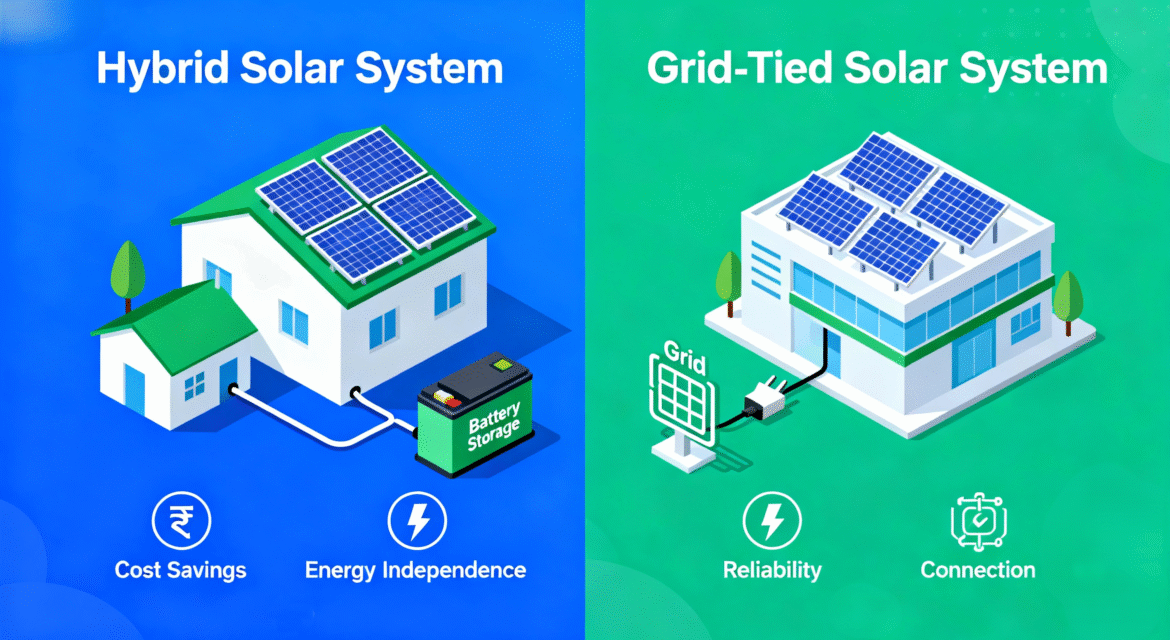
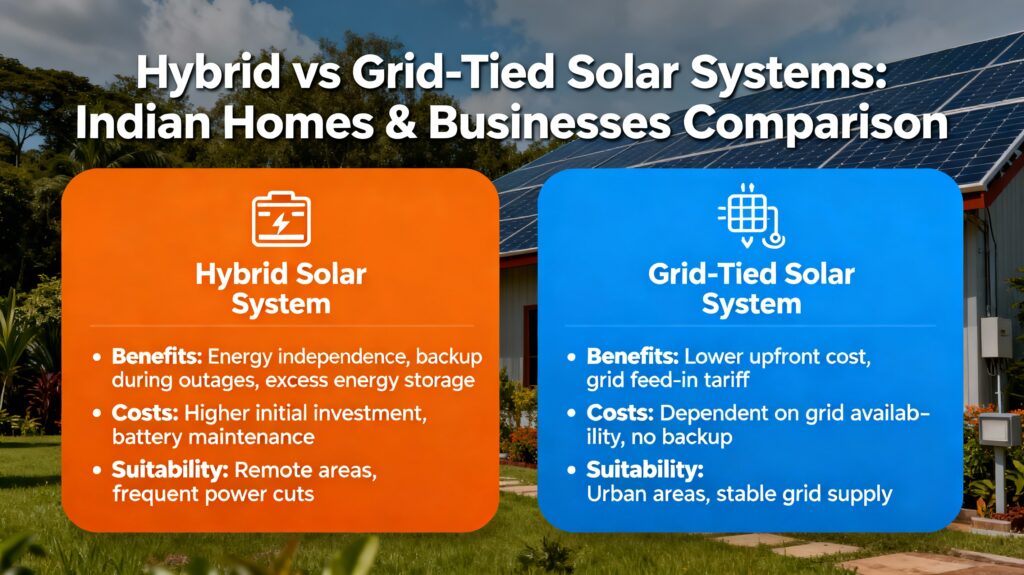
Grid-tied solar connects directly to the public electricity grid. Excess energy generated by your panels is fed back to the grid, potentially earning credits. This cost-effective system depends on a stable grid connection, making it ideal in urban and well-serviced areas. However, during power outages, grid-tied systems shut down for safety reasons, limiting independence.
Why Choose Hybrid Solar?
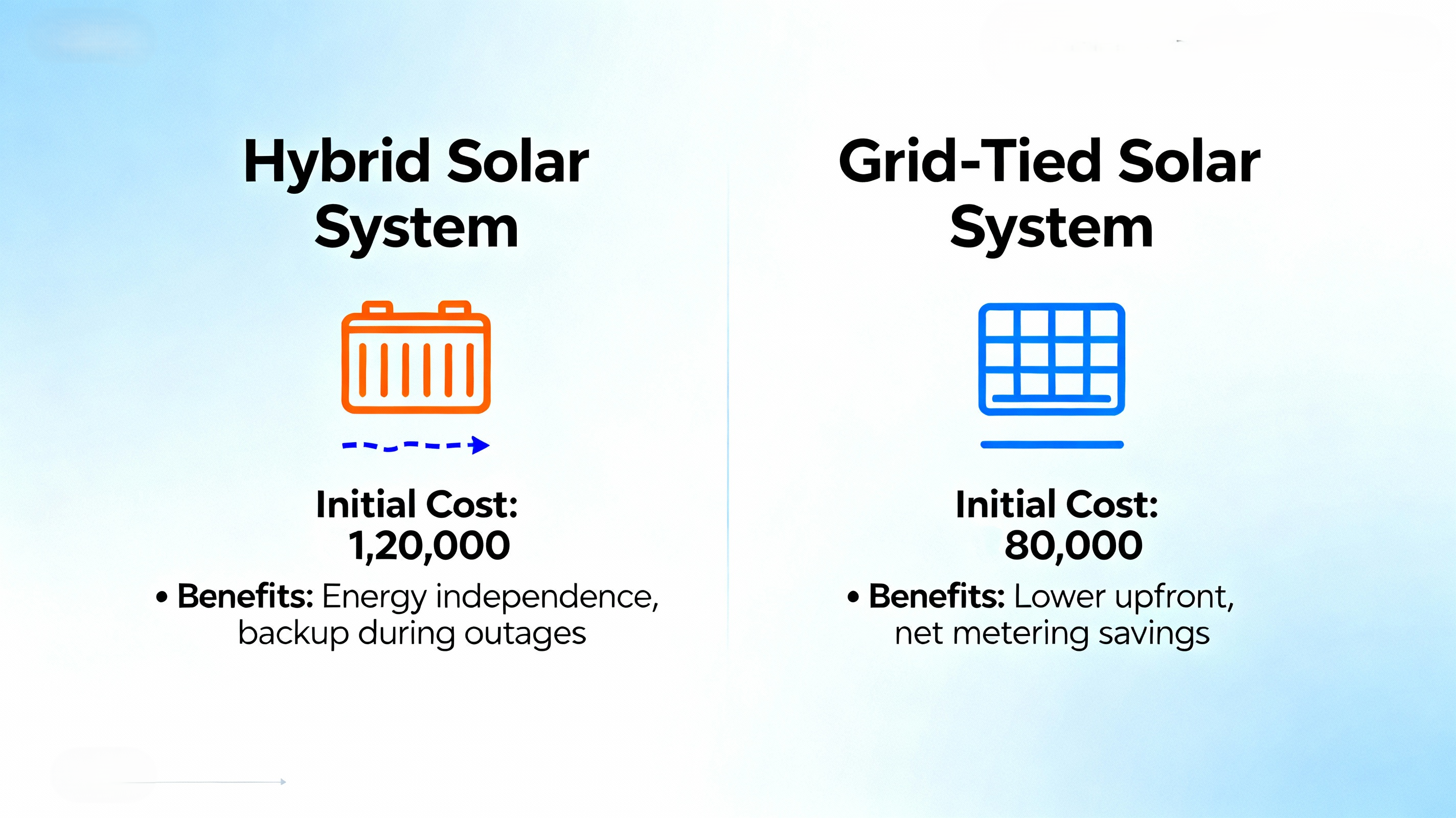
Hybrid solar systems combine grid connectivity with battery storage. This allows you to store surplus energy for use during grid failures or nighttime. Hybrids provide energy security in areas with unreliable grid supply or where backup power is crucial. The downside is higher upfront costs due to batteries and complex installation.
Cost, Efficiency, and Reliability Considerations
Grid-tied solar systems usually have lower installation and maintenance costs but offer less control during outages. Hybrids require investment in batteries and management systems but can maximize savings with time-based energy usage and smoothens power availability. Businesses and homes with critical energy needs or off-grid goals will benefit more from hybrid systems.
Installation and Maintenance Insights
Installation timelines vary: grid-tied systems can be installed quicker due to simpler setups, while hybrids require additional time for battery integration and system configuration. Maintenance for grid-tied systems is straightforward, focusing on inverter and panel upkeep. However, hybrid systems demand more regular checks on battery health and management electronics to ensure optimal performance and longevity. Both types benefit greatly from local installer expertise to maximize system efficiency.