

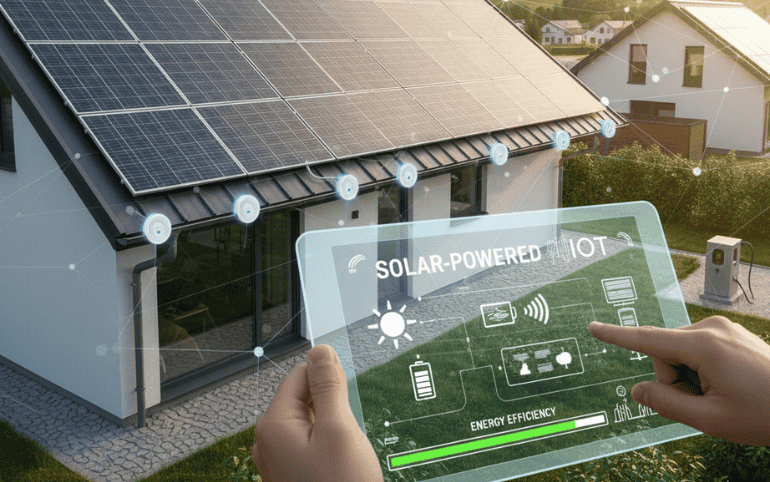
With the rise of the Internet of Things (IoT), solar-powered homes are becoming smarter, more efficient, and eco-friendly—helping homeowners reduce costs while contributing to a cleaner future. From intelligent sensors to automated power distribution, smart solar systems are transforming how people interact with energy.
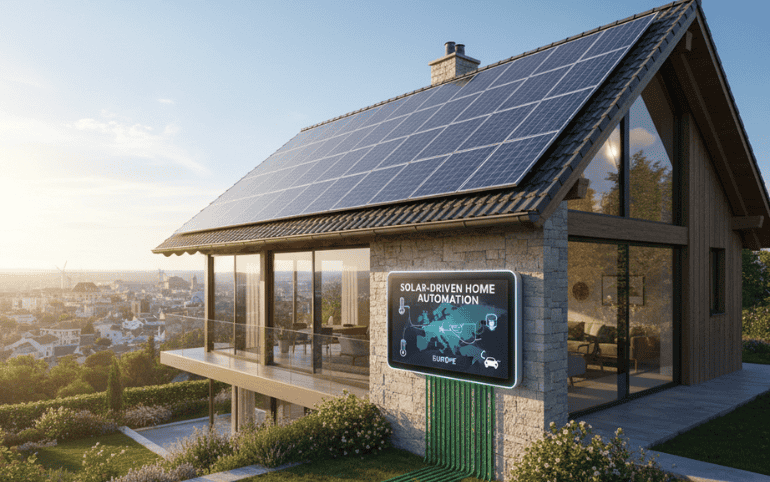
The Power of Solar-Driven Home Automation in Europe
Across Europe, solar-driven home automation is no longer futuristic—it’s a lifestyle choice. Homeowners are integrating solar panels with smart devices such as lighting systems, appliances, and home energy monitors to automate energy use throughout the day.
- Smart sensors and controllers manage solar energy distribution based on real-time sunlight and household demand.
- Intelligent inverters automatically route power between storage batteries and appliances, maximizing self-consumption.
- Excess solar energy can be directed to EV chargers or stored for nighttime use, reducing dependency on the grid.
Europe’s transition to smart solar homes demonstrates how automation makes clean energy not only sustainable but also more efficient—delivering both cost savings and reduced carbon emissions.
U.S. Innovation: Solar + Smart Thermostats for Peak Efficiency
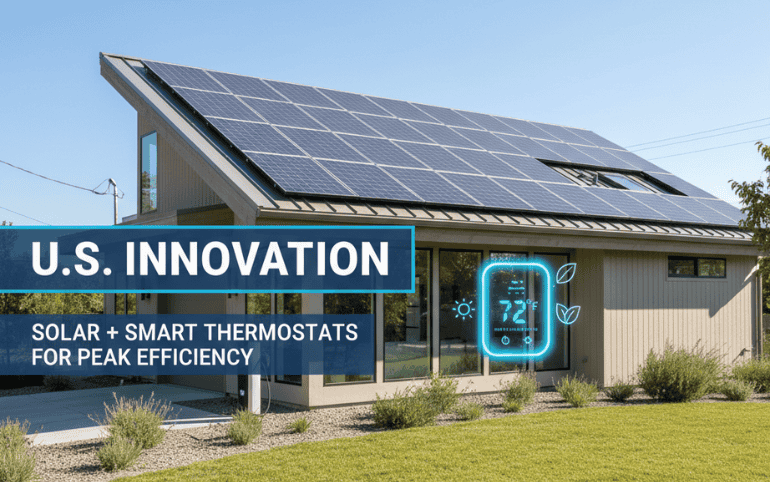
In the United States, the integration of solar energy systems with smart thermostats is helping homes flatten their energy demand curves—an approach known as peak-shaving.
- During daylight hours, solar panels power heating or cooling systems.
- Smart thermostats learn homeowner preferences and align HVAC operation with periods of maximum solar output.
- By pre-cooling or pre-heating during solar availability, homes cut grid reliance during costly evening hours.
Case studies from California and Texas show that solar-enabled smart energy management can reduce utility bills by up to 25% annually. Beyond savings, these systems enhance grid stability and contribute to a resilient energy ecosystem.
China’s IoT-Enabled Microinverter Networks
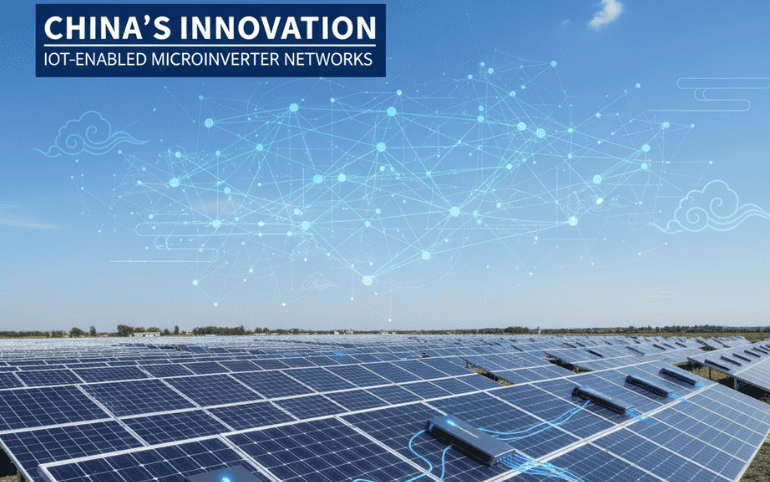
China is setting new benchmarks in solar IoT innovation through networked microinverter systems. These IoT-equipped microinverters enable real-time performance tracking and fault detection across large solar installations.
- Each solar module communicates data—voltage, current, and output—to a centralized monitoring system.
- AI algorithms analyze data to detect inefficiencies and predict maintenance needs.
- Homeowners access performance insights through intuitive mobile dashboards.
This IoT-driven infrastructure ensures every watt of solar power is optimized—enhancing reliability and lowering operational costs.
Similar IoT-based solar monitoring systems are now emerging in India, empowering homeowners to track energy performance and system health through cloud-connected platforms.
The Future of Smart Solar Homes
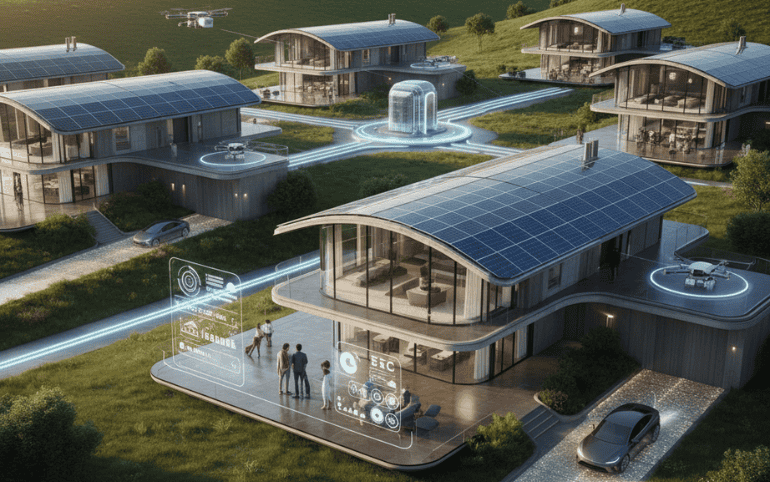
As IoT and solar technologies continue to evolve, the future of smart homes lies in adaptive, self-sustaining energy systems. Seamless integrations between battery storage, EV chargers, and grid-interactive technologies are transforming residences into independent power ecosystems.
SIA Engineering’s Role in Smart Solar Integration
At SIA Engineering, we design and deliver cutting-edge solar solutions that enable seamless smart home integration:
- Intelligent solar inverters with real-time monitoring.
- IoT-ready systems compatible with EV charging and smart appliances.
- AI-based analytics for performance tracking and predictive maintenance.
For forward-thinking homeowners and developers, solar-powered IoT is not just about savings—it’s about energy empowerment, sustainability, and long-term independence.
FAQ’S
1. What is a smart solar home?
A smart solar home uses solar panels combined with IoT devices to monitor, automate, and optimize energy usage for maximum efficiency and savings.
2. How does IoT improve solar power efficiency?
IoT sensors, controllers, and microinverters manage and track solar production in real time, ensuring every watt is used or stored efficiently.
3. Can solar power work with smart thermostats?
Yes, solar systems can integrate with smart thermostats to pre-cool or pre-heat your home during peak solar hours, reducing evening grid consumption.
4. What is IoT-based solar monitoring?
IoT-based solar monitoring uses connected inverters and cloud dashboards to show panel performance, detect faults early, and support predictive maintenance.
5. How does SIA Engineering help with smart solar homes?
SIA Engineering provides intelligent inverters, IoT-ready solar systems, and AI-based analytics to build efficient, connected, and sustainable smart homes.