


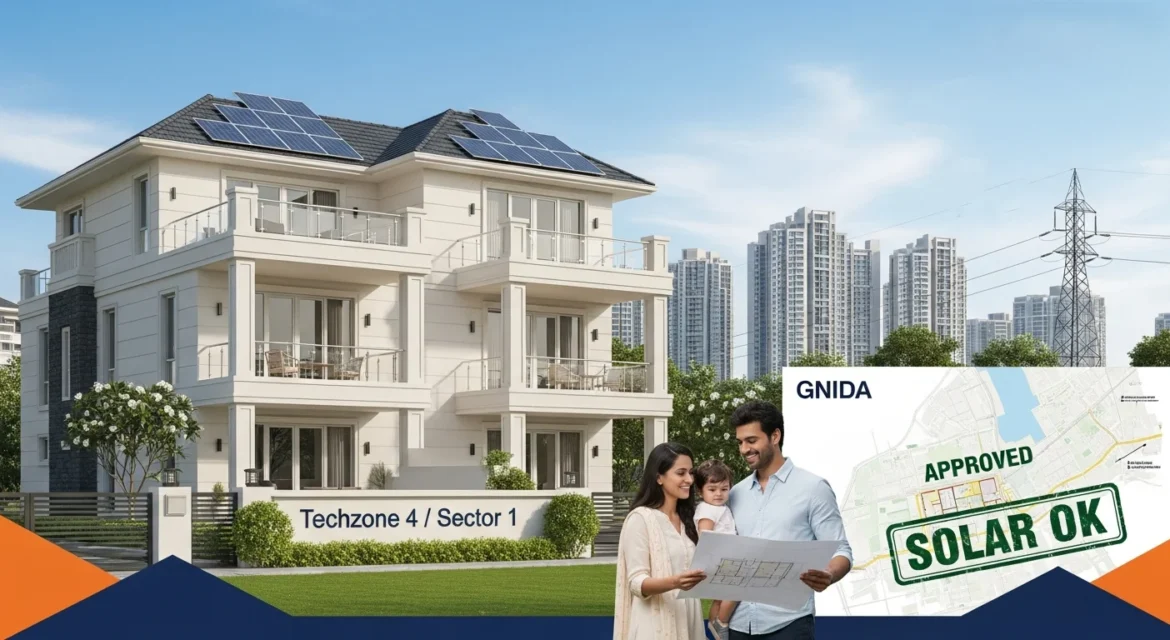
Greater Noida West (Noida Extension) is witnessing a construction boom, with thousands of families moving into new kothis and villas across Techzone 4, Sector 1, and Eco-Village belts. If your home is currently at the map approval stage or nearing a Completion Certificate (CC), one regulatory change matters more than most people realize: the Greater Noida solar mandate.
For homeowners and builders in Noida Extension, this is not just a compliance checkbox—done right, it becomes a long-term reduction in electricity bills and increases resale value. As part of the Uttar Pradesh Solar Energy Policy 2022 (updated for 2025–26), the Greater Noida Industrial Development Authority (GNIDA) has made solar installations mandatory for specific categories of new buildings. Ignoring this can stall your CC and delay occupancy-related formalities.
To navigate these regulations seamlessly, it is essential to partner with one of the best solar service providers in Noida. SIA Engineering stands out in this regard by delivering end-to-end rooftop solar planning, installation, and documentation support. They ensure homeowners benefit from compliant solar sizing, robust structure planning, and complete net-metering readiness—critical steps for avoiding any delays in the CC process.
The Mandate: Who Needs Solar?
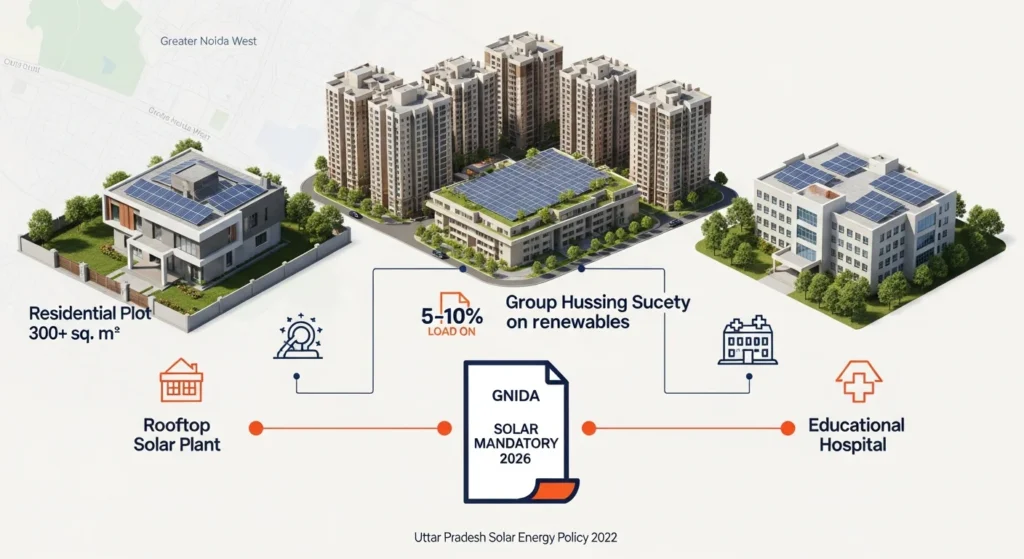
According to the latest building bye-laws effective in 2026, the installation of a solar photovoltaic (PV) system is now mandatory for three specific categories of construction. First, the rule strictly applies to Residential Plots measuring 300 sq. meters (approx. 358 sq. yards) and above, requiring them to install rooftop solar systems. Second, New Group Housing projects (societies and apartments) must meet at least 5% to 10% of their total connected load via renewable energy, which is typically achieved through rooftop solar installations. Finally, the mandate extends to Educational and Institutional Buildings, meaning all new schools, colleges, and hospitals in the region must incorporate solar systems into their infrastructure. If your project falls into any of these categories, your Completion Certificate may be withheld until you can demonstrate a functional rooftop solar system with proper documentation and compliance verification.
Why the Mandate Exists (Beyond Compliance)
The mandate represents more than just bureaucratic red tape; it is a necessary response to the area’s power infrastructure needs. Greater Noida West relies heavily on NPCL (Noida Power Company Limited), and peak load management remains a challenge as electricity consumption in modern villas rises. This increase is driven primarily by central air-conditioning systems, Electric Vehicle (EV) chargers, heat pumps, and other high-wattage appliances. By enforcing smart home integration with solar, the authority aims to reduce stress on the grid and make neighborhoods more resilient to power fluctuations.
The Bigger Win for Homeowners: Massive Bill Savings
For the homeowner, this mandate solves a significant financial problem. Many new villas in Greater Noida West have sanctioned loads of 10kW–15kW. Without solar, your monthly NPCL bill could easily cross ₹15,000 in summer months. A properly sized on-grid solar plant effectively turns your home into an energy-efficient asset with predictable energy costs. To put this in perspective with real numbers, a typical 8kW solar system in Greater Noida West can generate approximately 32-36 units per day (depending on season and shading). This generation can offset ₹7,000–₹9,000 in monthly electricity costs at current NPCL rates.
For homeowners comparing vendors, it is advisable to look for teams that regularly serve Noida and Greater Noida West. Local familiarity ensures faster site surveys, higher quality structure execution, and smoother net-metering application support. This is a primary reason many residents shortlist SIA Engineering as their go-to solar provider in Noida for both rooftop solar installations and mandate compliance support.
Understanding NPCL Net Metering in Greater Noida West
The good news for residents is that NPCL’s net-metering process for Greater Noida West is relatively structured, especially for new connections. You are generally permitted to install solar capacity up to 100% of your sanctioned load; for instance, a 10kW connection allows for a 10kW solar system.
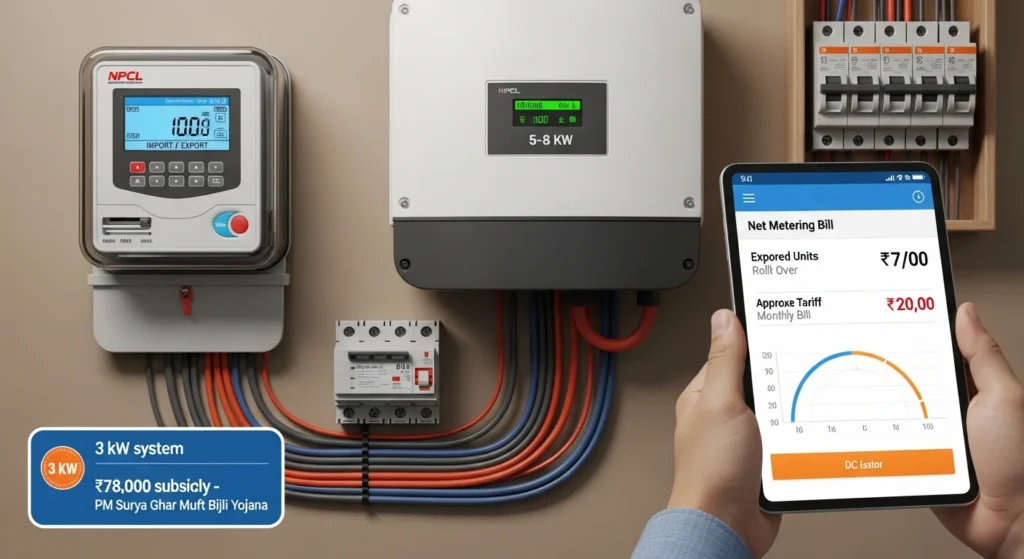
The practical process involves applying for net-metering simultaneously with, or shortly after, your permanent electricity connection application. Once approved, NPCL installs a bi-directional meter that records both import (grid consumption) and export (solar generation). Your monthly bill will reflect the net consumption, which is the units consumed minus the units exported. If you generate more than you use, the excess export units are carried forward to the next billing cycle as per NPCL’s current policy. Typically, net-metering approval takes about 2–4 weeks after application submission, provided all documentation is complete.
It is worth noting that many compliance failures happen because homes were not planned as “solar-ready” during construction. Often, conduit paths, meter-room accessibility, and rooftop structure layouts are ignored, leading to expensive rework later. If you are still building, planning these elements early with your architect and solar consultant is highly recommended.
Cost vs Compliance: Is It Expensive?
For a standard 300 sq. meter plot, a 5kW to 8kW on-grid system is commonly sufficient to meet mandate requirements and offset a meaningful portion of your electricity bills. In terms of typical investment, a 5kW system usually costs between ₹2.5 Lakhs and ₹3 Lakhs, while an 8kW system ranges from ₹3.5 Lakhs to ₹4 Lakhs. These prices vary based on the brand of panels, the type of inverter (string vs. micro-inverter), the rooftop structure material (GI vs. aluminum), roof height, and cable routing complexity.
To make this investment more affordable, residential homeowners can avail benefits under the PM Surya Ghar Muft Bijli Yojana. This scheme offers subsidies of ₹30,000 for 1kW systems, ₹60,000 for 2kW systems, and ₹78,000 for systems of 3kW and above. This subsidy significantly reduces the upfront financial burden. With current NPCL tariffs and these subsidy benefits, most homeowners achieve a payback period of 4–6 years, after which the solar system generates virtually free electricity for its remaining 20+ year lifespan.
For homeowners who want “one vendor” responsibility—covering everything from site survey and system design to rooftop structure fabrication, installation, commissioning, and handover documentation—SIA Engineering (Noida) provides turnkey rooftop solar execution for residential and commercial projects across Noida, Greater Noida West, and surrounding NCR areas.
Building “Solar-Ready” Homes: Architect Checklist
If you are still at the construction stage, instructing your architect and contractor to include specific solar-ready elements is critical. First, insist on Conduit Piping, specifically dedicated PVC conduits (minimum 1.5-inch diameter) running from the rooftop to the meter room for DC and AC cables. Planning this route during wall construction is essential, as retrofitting conduits through finished walls is expensive and messy.
Second, consider an Elevated Solar Structure. If you plan to use your terrace for recreation, a garden, or outdoor seating, pre-designing an elevated structure (typically 8–10 feet high) ensures solar panels don’t occupy your usable terrace space while improving ventilation and panel cooling efficiency. For advanced structure planning, refer to future-proofing solar EPC projects to understand how smart design maximizes ROI.
Third, focus on Shadow Planning by avoiding the placement of water tanks, mumty (staircase exit) structures, or tall boundary walls on the south-facing side of your roof, as these cast shadows that significantly reduce solar generation. Finally, ensure a Roof Load Assessment is conducted so your structural engineer accounts for the additional load of solar panels, mounting structures, and potential water pooling. While most modern structures handle this easily, older designs may need reinforcement. A solar plan completed at the blueprint stage typically costs 30–40% less than retrofitting after construction is complete.
Conclusion: Compliance + Savings = Smart Investment
The Greater Noida West solar mandate is ultimately a blessing in disguise. While it adds upfront planning and investment, the benefits are substantial. It protects against steady increases in NPCL tariffs by locking in your energy costs and ensures a smooth Completion Certificate (CC) process by avoiding regulatory delays. Furthermore, it improves monthly cashflow by reducing electricity expenses by 60–80% and increases property value, as homes with solar command higher resale and rental premiums.
If your home is in Greater Noida West, Noida Extension, or nearby Noida sectors, now is the time to get a professional solar readiness assessment—covering roof layout analysis, sanctioned load verification, conduit planning, and structure selection. This prevents costly delays and helps you choose a vendor confidently, especially if your goal is to work with the best solar provider in Noida for your specific home requirements.
Get Started with SIA Engineering – Rooftop Solar Experts in Noida
SIA Engineering is a Noida-based solar EPC company specializing in residential and commercial rooftop solar installations across Noida, Greater Noida West, Greater Noida, and Ghaziabad (NCR). With expertise in GNIDA compliance, NPCL net-metering applications, and turnkey solar execution, SIA Engineering helps homeowners navigate the solar mandate smoothly—from site survey to final commissioning.
FAQ’S
Q1: Is solar mandatory for a 200 sq. meter plot in Greater Noida West?
Current strict mandates typically apply to plots of 300 sq. meters and above. However, smaller plots are strongly encouraged to install solar for substantial bill savings—a 3kW system can reduce monthly bills by ₹3,000–₹4,000.
Q2: Will I get a Completion Certificate (CC) without solar for a 350 sq. meter plot?
For plot sizes covered under the mandate (typically 300 sq. m+), GNIDA may withhold your CC until solar installation is verified through site inspection and documentation.
Q3: Can I get NPCL net-metering for an under-construction home?
No. Net-metering is activated only with a permanent electricity connection. Temporary construction connections do not qualify.
Q4: How much solar capacity is required to meet the GNIDA mandate?
Requirements are typically linked to plot size or connected load. Common norms suggest approximately 1kW solar per 100 sq. meters of plot area or 5–10% of sanctioned load.Q5: Does PM Surya Ghar subsidy apply to mandatory solar installations?