


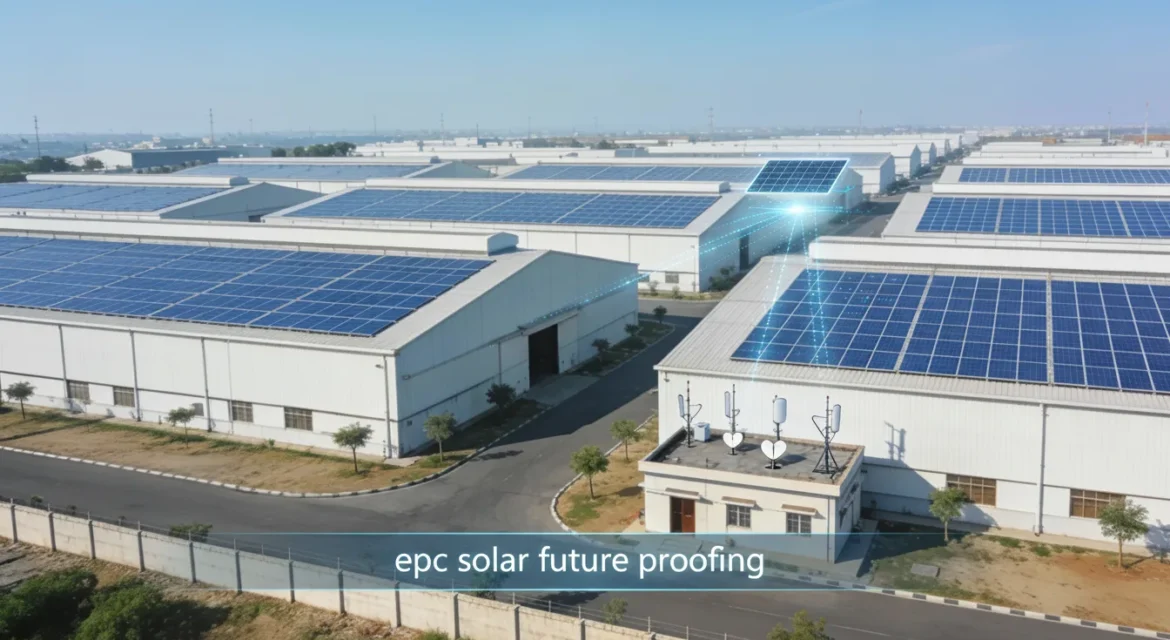
A solar EPC project covers the complete lifecycle of a solar plant: engineering and design, procurement of modules, inverters and structures, and construction, commissioning and handover to the client. In 2025 in India, EPC partners are expected not just to build plants, but to deliver predictable generation, grid‑ready integration and long‑term performance guarantees.
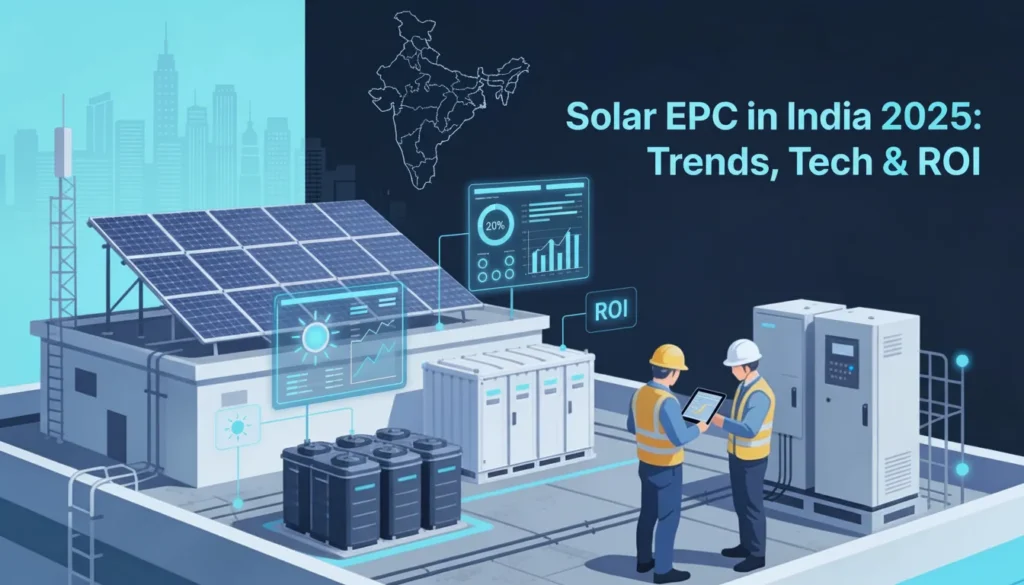
For commercial, industrial and utility clients, choosing the right EPC is now a strategic decision, because the partner’s design choices directly affect payback time, O&M costs and compliance risk over 20–25 years.
Key technology trends shaping EPC decisions
Several technology shifts in 2025 are changing how serious EPC players design and execute projects in India.
- Bifacial and TOPCon modules
Bifacial and TOPCon modules are gaining share as they can deliver higher energy yield and slower degradation, especially on utility‑scale and large rooftop projects with reflective surfaces. A skilled EPC evaluates site albedo, shading and structure height to decide when these modules justify their higher upfront cost. - Hybrid systems and storage
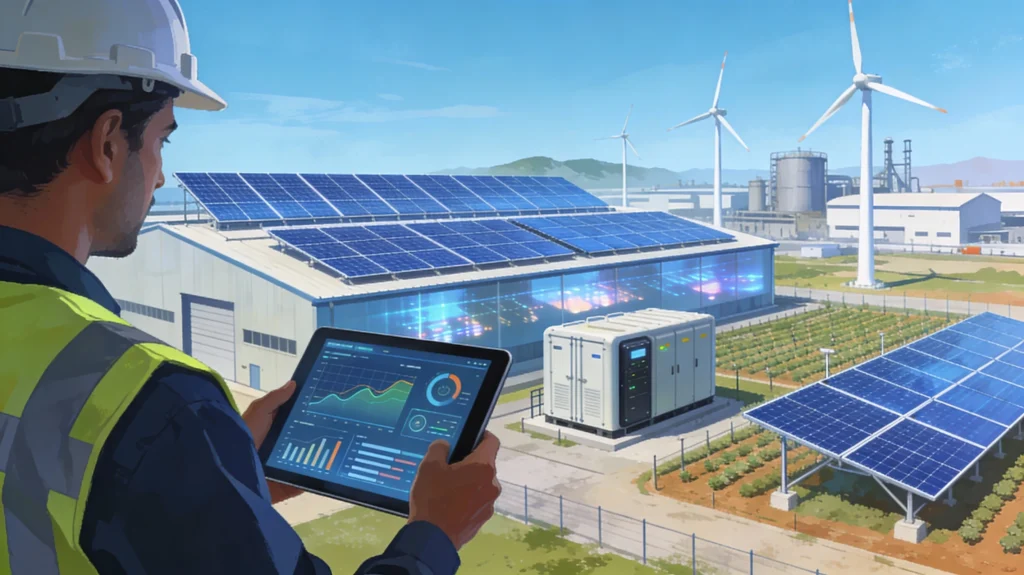
Hybrid projects that combine solar, wind and battery energy storage systems (BESS) are growing because they offer more stable, round‑the‑clock green power. For many industrial loads and open‑access consumers, EPCs must now size storage and coordinate hybrid dispatch to manage intermittency and grid constraints. - Digital O&M and smart monitoring
Advanced SCADA, AI‑based predictive maintenance and drone inspections are becoming standard to detect faults early, reduce downtime and protect investor returns. Future‑focused EPCs design plants with high‑quality sensors, robust communication networks and clear data ownership from day one.
How expert EPC design boosts ROI
In a competitive 2025 market, two plants with the same DC capacity can give very different returns depending on the EPC’s engineering decisions.
- Site‑specific layout and shading analysis
Detailed 3D layout optimisation, string design and shade analysis minimise clipping and mismatch losses, improving specific yield without increasing capacity. This directly shortens payback periods for C&I rooftop and ground‑mount projects. - Matching modules, inverters and structures
Robust structure design for local wind speeds, corrosion conditions and roof loading reduces mechanical failures and unplanned downtime. Correct DC/AC ratio, inverter selection and protection design help plants operate safely at high capacity utilisation factors, especially in high‑irradiance states. - Grid compliance and safety from day one
Leading EPCs design to meet DISCOM interconnection rules, state regulations and safety standards, avoiding later curtailment or penalties. Clear documentation, testing and training at handover also support safer operation for client teams throughout the plant life.
Why Indian businesses now prefer experienced EPC partners
With India crossing major solar capacity milestones and targeting 500 GW of non‑fossil capacity by 2030, clients are more aware that the cheapest EPC quote is often not the best long‑term choice.
- Focus on lifecycle cost, not just CAPEX
Forward‑looking businesses evaluate EPCs on generation guarantees, O&M philosophy and bankability rather than price alone. Plants built with better engineering and quality components often pay back faster and deliver higher internal rates of return over 20+ years. - Need for sector‑specific experience
C&I rooftop, captive open‑access, utility‑scale and hybrid projects each have different design, permitting and grid challenges. EPCs with domain experience in industrial rooftops, high‑dust regions or high‑wind sites can proactively design for local realities, avoiding expensive redesigns later. - Trust, transparency and long‑term partnerships
Many of India’s leading EPCs emphasise transparent performance reporting, strong financials and long‑term service commitments to win repeat business. This long‑view approach reassures investors and lenders that plants will keep performing as modelled for the full project tenure.
FAQ’S
- What does “future-proofing” a solar EPC project mean?
It means designing, building and maintaining a plant so it stays efficient, compliant and profitable over its 20–25 year life. - Why are bifacial and TOPCon modules important for 2025 EPC projects?
They offer higher energy yield and lower degradation, which improves long-term returns when properly engineered for the site. - How does a good EPC partner improve my project’s ROI?
An experienced EPC optimises layout, components and grid integration to increase generation and reduce failures and O&M costs. - Should Indian businesses consider storage or hybrid systems with solar now?
Yes, pairing solar with BESS or hybrid setups can stabilise supply, reduce peak tariffs and protect against grid issues. - What should I check before finalising a solar EPC company in India?
Check their track record, certifications, quality of components, performance guarantees and transparency in monitoring and reporting.